Albert Jackson Strickling came into this world on August 6, 1882, the same year as Franklin D. Roosevelt, Aloise Hitler, the elder half-brother of Adolf, James Joyce, John Barrymore and Samuel Goldwyn. On their way out were Henry Wadsworth Longfellow, Charles Darwin, Ralph Waldo Emerson, and Mary Todd Lincoln. Jesse James was shot in the back of the head by Robert Ford, and Charles J. Guiteau was hanged for the assassination of President Garfield. It was a momentous year for births and deaths.
Ninety-four years later, on May 25, 1976, A.J. Strickling did not wake up in this world. Howard Hughes had died in April and Mao Zedong would breathe his last in September of 1976. Jimmy Carter would become president of the United States in November, and Microsoft was formed that same year by a couple of computer geeks. For my father, the momentous decisions A.J. made between 1882 and 1976 were more significant than the history being made while the man was growing older, and those choices were the catalyst for Daddy's reaction to the pre-dawn phone call from Ohio that May morning to be fraught with confusion and emotional upheaval.
I had only seen my grandfather, Pop, once, that I remember. We had lived for a couple of years in Lake Charles, Louisana, when I was five or six years old. We girls had been told Pop was coming to visit us there, and his impending presence seemed to precipitate an unusual bustling in the house. Of course, I did not know what I know now and did not think to question why this would be my first peek at the man who had fathered my father.
Mother made a delicious meal, I am sure, and had set out her crystal and china to welcome this wayward parent. He was, as might be expected, late. We sat around watching the proverbial "pot boil" until finally we saw an enormous Cadillac pull into our driveway. Unrolling one arm and one leg at at time, out of the driver's seat was Daddy's daddy. Onto his bald head he placed a large hat which he had reached for from the passenger seat before he stood fully beside the car. I had never seen such a fat man! He buttoned his coat over his enormous belly and shook hands rather formally with Daddy. He smelled of aftershave and sweat, and he barely looked at his three gaping granddaughters standing in the driveway. The visit, for me, was a non-event, as I cannot recall anything except the fact that he could not see his feet and had difficulty putting his shoes on.
Though Grandmother Smith, Celestia, stayed with us on a rather frequent basis when we were young, I do not recall any conversations about or references to Pop. Daddy had put him and his abandonment away; but, it had shaped his entire life! After Pop's visit, we girls asked Daddy why we had never seen him. That is when our father told us the story about A.J. leaving the dollar bill on the ironing board and walking out for good.
I can only imagine how difficult that short visit from Pop was for Daddy. Years of dammed offenses pushing against his heart, needing to be addressed. Fear of further rejection keeping them at bay. The man was present before Daddy so that he could look into his eyes and ask, "Why did you leave me? Why did you not love me?" But, the questions would never be asked or answered, as the phantom father had no response that would heal the wounded heart of his son. Pop probably did not know why he did not care enough to stay. Surely he had not thought deeply about Jim, then or now. Jim still needed a father who would never manifest.
Upon Pop's physical death, all earthly opportunities to get some closure on his childhood disappeared for Daddy. His first response was to brush the death of his father off. "I'm not going to Ohio for that!" But as he began reminiscing with Mother about his life as a boy, he decided to make the trip with her to Ashland, Ohio, for the funeral.
The small commuter plane landed at Ashland County Airport the afternoon before the services. Mother and Daddy rented a car and drove south on Route 58 into downtown Ashland. My father was uncharacteristically sullen and terse, his mind and heart in a necessary reverie, forced to touch the buried mutiny of a childhood spoiled.
Though his living brothers and sisters were there, they had not had his same history with Pop. Their grieving, such as it was, did not touch the place his father's death reached in Daddy. As Mother and he turned from the open grave, past the stands of carnations and empty folding chairs, and walked to the rental car after the funeral, a sob arose in Daddy, then tears he could not control. Mother knew only to hold his hand, for the crying was not for the beloved lost patriarch of the Strickling clan, but for the Daddy who did not love him. Words cannot recoup such a loss.
Once safely inside the car, Daddy leaned his arms and head against the steering wheel and sobbed, Mother patting his back, sorry for his pain. From out of his coat pocket, my father finally pulled a handkerchief, blew his nose and started the car. He drove down Main Street to the middle of Ashland. The late spring day was marked by sunshine and a light breeze, so he rolled his car window all the way down and took a deep breath. Getting his bearings, he turned up Union Street and announced to Mother that he was going to find his home - the one A.J. deserted. It took some time to locate the old neighborhood, but when he pulled the car up in front of the tiny house in which he had been reared, tears came again. This time for the little boy who had stood at the screen door watching his daddy walk away.
Hoping perhaps for a catharsis that did not present, Daddy went back to Texas still fatherless and abandoned. No real epiphany calmed the turmoil of his rejection. There was no closure but death. The sins of his father hung with impunity in the caverns of Daddy's memories, forever unconfessed and never atoned for.
About Me
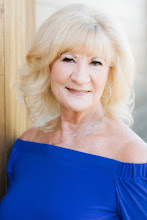
- Kay Farish
- Coldwell Banker Residential Brokerage is the largest international luxury real estate company in the world with over 88,0000 real estate professionals located in over 3000 offices in 49 countries. We do $129.6 million dollars in sales per day with an average sales price for each home reaching $1,000,000 or more. I am privileged to be a part of this global luxury brokerage, and I offer concierge service to my amazing clients all over Orange County, California, and beyond. I am a member of the Institute of Luxury Home Marketing and am equipped to either manage the sale of your current property or assist you in procuring your next investment. My website is KayFarish.com and I can be reached at kayfarish@gmail.com. Please enjoy the blog. It is meant to both inform and entertain as you take a look behind the scenes of the real estate world. It is my hope that with the Bottom Line at the end of each blog, my readers will gain just a bit more understanding of the sales and purchasing processes in the world of real estate! There is a comment section, too, and I'd love to hear from you!


No comments:
Post a Comment