Like all the other photographs of executed prisoners at the Tuol Sleng Museum in Phnom Penh, Cambodia, this young teenaged boy wore a white card with a number emblazoned on it. What caught my attention, though, was that his number was attached to his body with a safety pin! Face after beaten, swollen face assaulted me as I walked through the museum in October of 2005. Six thousand of them! Up to twenty thousand Cambodians were tortured and murdered in the former Tuol Suay Pray High School that became known as S-21. Only seven people survived. The government mandated each prisoner be captured on film before execution.
From 1969 until 1973 the United States killed nearly one hundred fifty thousand peasants by the intermittent bombing of North Vietnam sanctuaries in Cambodia. For refuge, agrarian peasants fled to Phnom Penh, the capitol, by the thousands, disrupting the economic and military balance of the country.
Pol Pot, the leader of the Red Cambodians, or the Khmer Rouge, seized this instability as an opportunity to form the communist peasant farming society he had worked toward since he had witnessed it firsthand in China. Mao's "Great Leap Forward" involved the forced evacuation of cities and the deaths of those deemed to be enemies of the vision. Pol Pot created the "Super Great Leap Forward" with his army of predominantly trigger-happy adolescent boys, and seized control of Phnom Penh on April 17, 1975. Declaring it to be "Year Zero," Pol Pot began his cultural cleansing by purging Cambodia of capitalism, western culture, religion - any foreign influences. Embassies were closed, foreign languages were banned, money was forbidden, businesses were shuttered and parents were made to relinquish control of their children. Bicycles, radios and television were outlawed and citizens were isolated completely from the outside world. All Cambodian cities were forcibly evacuated, including over two million residents of Phnom Penh, who were marched out to the countryside on foot. Those who did not perish along the way were forced into the "killing fields" where they died by the millions from disease, malnutrition, overwork or execution. Deadly purges eliminated the educated - doctors, lawyers, teachers. Annihhilated also were religious leaders, including Buddhist monks, and the wealthy, for redistribution of their possessions. Red Cambodians wanted to remove "what is rotten" from their realm. Up to twenty-five percent of the population of Cambodia was crucified in this coup.
In the 1950's, 1960's and 1970's, Cambodia sent its best and brightest to universities in America and Europe. Many of these young people traveled to southern California to attend UCLA, USC, Cal State Long Beach and Cal State Los Angeles. With degrees in hand, most of the graduates returned to their homeland to integrate their skills into the economy there. Many of these intellectuals became the first casualties of the bloodbath that followed under Pol Pot. Those who had settled instead in the United States became a refuge for their relatives who had escaped the carnage of the Khmer Rouge. Ultimately a community of approximately thirty-five thousand Cambodians grew in the port city of Long Beach, California. Many of the refugee families branched out from the west coast to the midwest for jobs and education. This was how my mother met the Cambodian family from Long Beach at her church in Texas one Sunday morning in 1983.
Aware of their intense struggle to survive and their undaunted courage in pursuing escape, Mother befriended the family. Love made up for the language barrier as Mother spent time with her new friends in her home. As she became aware of their needs, Mother called on friends and family to supply food, clothing, and even employment. Though Daddy was supportive of his wife's new ministry, it was she with whom they related. Over the weeks and months before Mother's cancer recurred in 1984, my parents became acquainted with the extended family of their Asian friends, dining on several occasions with Long Beach relatives who were visiting Texas. Such a strong connection was forged that my parents were invited to family weddings, birthdays and Cambodian holiday festivities.
The events between 1983 and 2005 had all but stunted my memories of Mother's sweet relationship with the refugees. When I saw the missionary film presented at our church one Sunday in early 2005, I was unaware of why the faces of the Cambodian orphans so deeply resonated with me, compelling me to make plans to travel half way around the world to be a part of a groundbreaking ministry to orphans, Foursquare Children of Promise. That is how I found myself face to face with images of the Cambodian holocaust in the Tuol Sleng Museum that October day.
It was apparent to Daddy after Mother died we children were not going to be responsible for him, especially in terms of regulating his conscience. Nor did he really want us much involved in his activities. In 1987, after our family had moved to California, Daddy sold the house in which Mother died and rented an apartment with two young Cambodian men. On a visit to Texas in 1988, we met his roommates briefly when we came to his apartment to take him to lunch. His new home was dark and depressing, and there was a palpable aura in it that made my skin crawl. The blinds were closed and the over-sweet scent of incense clung to Mother's sofa, which looked odd in its new environs, as if it were a pedigree puppy, once loved and pampered, now looking out forlornly from its dirty cage at the pound. In fact, all the artifacts of life before then that now sat in Daddy's apartment seemed drudged up from another hemisphere and another age and plopped down will-nilly into the wrong universe. In the recreation of his persona, my father had necessarily thrown the best part of my history with him away. Feeling out of place and fidgety, I stepped outside to wait for Daddy in his parking lot.
The two Cambodian men were quite Americanized - tight pants, close-fitting silk shirts, greasy, slicked-back hair and designer sunglasses. My gut understanding that they were homosexual partners was confirmed later by the journals that Daddy kept in therapy years later. Daddy, it seems, felt no guilt about his sexual relationship with them because they were already practicing homosexuals when he met them. At least, they were adults. Inserting the father of my youth into this alternative lifestyle was paradigm crushing and heartbreaking. Making it through lunch with Daddy that day was like closing my eyes and jumping off a cliff, wondering when I would finally hit bottom and be done with it.
By the early nineties, Daddy had purchased a home in Arlington, Texas, and wrote to his children that a Cambodian family, a young man, his brother and his wife, were moving into the home with him. In an effort to assure that he was taken care of in his declining years, Daddy had agreed to deed the home to the family upon his death if they would take care of him as he grew older. Already Daddy was beginning to experience health difficulties, many of which were related to his weight, keeping him from being able to adequately oversee the upkeep of a home. The Cambodian wife cooked and cleaned and the men manicured the yard and managed household duties. Daddy exacted some rent from them, also, though it was minimal. Both men had jobs, so Daddy was alone with the young woman during the day.
The arrangement worked relatively well until a baby boy was born to the couple. Daddy's interest in the child was unsettling to the young mother. Before the child turned two years old, she packed her belongings in the night and left without telling her husband where she was going or why she was leaving. Aside from the fact she felt like a slave in his home, it seemed to me she was rescuing her newborn. That I know of, her husband did not see her again.
The two men continued for a few years to live with Daddy, though the relationship became more fractured as some of Daddy's promises to them vaporized. He changed his mind about deeding them the house because Daddy felt they were no longer carrying their weight with its maintenance. Certainly the young men felt tricked and used. Their parting with my father was bitter. The last words he heard from the young deserted husband were, "I don't care if you live or die."
Daddy was, of course, trying to create for himself an alternate family in his insecurity about whether we sisters would come to the plate when he needed health care in his old age. As a convicted child molester, he was not allowed to be admitted to any assisted care facility, as he might be too close to visiting children; so, he knew he needed a plan. Also, he had lost the sense of family with us because he had destroyed it with his own two hands. The Cambodians did not know he was a pedophile. To them he was Flossie's grieving husband, safe, old and needy. My father actually made a few trips to Long Beach for their family celebrations over the years, and he was lovingly embraced. But, he used them up and was finally left to redesign his life once again.
In 2005, when our plane landed in Phnom Penh, Mother's vision for impacting the lives of her Cambodian friend seemed to have come full circle. Military men with guns on their shoulders watched our every move as we traveled through baggage claim and headed warily to the Foursquare Children of Promise headquarters downtown. From the windows of the ministry van we watched in wonder as we saw trucks stuffed to overflowing with as many Cambodians as would fit in any vacant space. No bicycle seemed reserved for just one person or just one dead chicken hanging from the handlebars. Around the downtown hotel which overlooked the Mekong River were beggars- some children, some victims of land mines or ravaged by disease- and, oddly, a man walking his elepant. Orphans ran about the streets of most cities and towns in Cambodia where the human trafficking of children is near epidemic. Our trip was organized in order to understand the Foursquare ministry as a refuge for orphans as well as an evangelistic outreach to a nation in desperate need of love and healing. Each orphanage is led by a "pastor" and his family. There are so many widows in this ravaged nation, that they are taken in also and are charged with the oversight of five children as their "mother."
Cambodian roads outside of the three big cities are largely made of dirt, and deep, dangerous potholes are ubiquitous. Some of the orphanages are in very remote outlying areas, so our team was exposed to the soul of Cambodia with its lavish foliage, roadside markets that sell gasoline in old two liter soda bottles and sticky rice treats from baskets, incomprehensible poverty, and small, tanned generous people. In our suitcases we had brought candy, balloons, toy cars, dolls, toothpaste and toothbrushes, body lotion, clothing, and fingernail polish. It was the hands of the Cambodian girls I will never forget. The Ba Lang orphanage had just been completed on our first trip, so the children had been there less than two weeks and were still wearing their street clothes. Unwashed, as yet, and feeling somewhat unsure of their experience, they gathered around us in awe as we approached their beautiful new home. One of the children was attached to an IV; one of the "mothers" who oversaw the children had bleeding gums that were exposed as an almost beatific smile spread across her face when we hugged her. God gave me two daughters that day. They do not know it, but I do. They were only ten years old and freshly saved from the ignominy of slavery in Thailand, and they were absolutely beautiful, though they still smelled of the streets. Our team bought them uniforms for school and other clothing, but that first day we just loved them, and I painted fingernails-dirty, ragged, sticky fingernails. It was in the touching of their skin, in making them feel loved and lovely, that I thought of my Mother. Trying to right two wrongs, though that was not my mission in the beginning. While braiding their dark, tangled hair I thought of all the mornings my daughters and I had taken for granted this intimate bonding routine. Vanessa had come along with me and was prodigiously creating balloon animals across the room to the utter delight of every child and adult in the orphanage. Three generations of us were across the world loving the people Mother had originally been so compassionate about and passionate for. Mother, of course, in spirit; but, I know now that had it not been for her prayers for them, we would not have found ourselves touching what touches the heart of our God: widows and orphans.
About Me
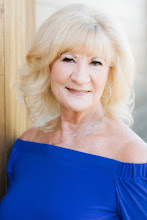
- Kay Farish
- Coldwell Banker Residential Brokerage is the largest international luxury real estate company in the world with over 88,0000 real estate professionals located in over 3000 offices in 49 countries. We do $129.6 million dollars in sales per day with an average sales price for each home reaching $1,000,000 or more. I am privileged to be a part of this global luxury brokerage, and I offer concierge service to my amazing clients all over Orange County, California, and beyond. I am a member of the Institute of Luxury Home Marketing and am equipped to either manage the sale of your current property or assist you in procuring your next investment. My website is KayFarish.com and I can be reached at kayfarish@gmail.com. Please enjoy the blog. It is meant to both inform and entertain as you take a look behind the scenes of the real estate world. It is my hope that with the Bottom Line at the end of each blog, my readers will gain just a bit more understanding of the sales and purchasing processes in the world of real estate! There is a comment section, too, and I'd love to hear from you!


No comments:
Post a Comment