Mother, wearing the pink shantung suit she had donned for my wedding the previous summer, walked down the aisle to the strains of the old love song The Twelfth of Never. Lyrical words of love and romance accompanied her. You ask how long I need you, must I explain? I need you, oh, my darling, like roses need rain. You ask how long I'll love you, I'll tell you true. Until the twelfth of never, I'll still be loving you.
Waiting for her at the altar, all suited out for the occasion, was Daddy. Hold me close! Never let me go! Hold me close. Melt my heart like April snow. Mother made her way to the front before the song was finished; she and Daddy stood looking at each other until the last yearning note of the song dissipated into the air.
It had been our father's idea to surprise Mother on their twenty-fifth anniversary with a renewal of vows and a silver anniversary shindig. I had accompanied him to the jeweler to create a ring for Mother to replace the small set she had worn for all those years. I was very disappointed at the finished product as it only somewhat resembled the one I had helped design; but, Daddy thought it lovely. Long time friends and close family had gathered to fete the couple; but, Mother seemed uncharacteristically subdued during the ceremony and later at the house where we three children had prepared a reception we hoped worthy of Mother's usual parties.
October 27, 1945, marked the beginning of a new life for Mr. and Mrs. James A. Strickling. A year earlier, Florene had seen Jimmy off to war with a promise to write to him. The couple had only a few days to get to know each other before Jim shipped out with the army. Letters would prove to be their real connection. Florene was conflicted about her feelings for Dan and Jim, finally telling God she would marry the one who came back first. It was Jim. With Rita and Bud attending them, the two repeated their vows that October day and set up house in Fort Worth.
There was, again, no honeymoon; but, there was, of course, a first night together. Florene had been married before and understood sexual pleasure. As they lay together for the first time, her new husband seemed uncomfortable with her body and could not seem to coax his own to respond. Florene was by nature not aggressive and certainly had not been schooled in the art of lovemaking. Her experience with Mac was void of arousal difficulties, and he was the only comparison she could make as she struggled silently in their conjugal bed to please Jim. She did not know what to do to help her new husband consummate their relationship. Rolling over onto his back, frustrated and somewhat embarrassed, Jim took Florene's hand and confessed: "I am slow to arouse." Then he drifted off to sleep, leaving both he and Florene lonely and unfulfilled.
Wrapped safely in her covers, wide awake, Florene lay there swallowed up in her inadequacy once again. It was the first of many, many times over the next forty years that she would wonder if she had married the wrong soldier. Fluttering feelings of anxiety stirred up some of those same emotions Florene was always fighting when she was with Mac. Not married twenty-four hours and already her body was incapable of arousing her sleeping husband to heights of pleasure that both deserved after all the waiting and hoping of the last year. Tears of disappointment burned her eyes then escaped, silently soaking the pillow beneath her head. Hope was a fragile commodity to Florene, but that night it was all she had to hold. Surely tomorrow would be better.
Over the years, and especially after their three daughters were born, Jim turned less and less to Florene for physical oneness. He allowed her to believe that she was flawed in the process; and, if she was responding to his signals and treatment, she probably was inadequate. She was, after all, a woman; she could not have guessed he preferred men. By the time Jim planned the anniversary affair, he had not had sex with his wife for eleven years - since 1959! Frustrated over his own impotence with her, he had suggested to his bride: "Let's just live as companions."
Friends do not sing The Twelfth of Never to each other nor look lovingly into each other's eyes as a minister renews vows previously unkept. Desiccated passion and proclamations of inadequacy taken to the altar in a sham recital of love unexpressed ignited a deep indignation in Mother. It would be fifteen years before I understood the set of her face that day in October of 1970.
While others admired her new ring and told her she deserved it, her eyes barely glanced at it. As she opened her many silver gifts and thanked each person profusely, she looked to me more like a hospital patient who has just discovered she has an incurable disease and is smiling at her visitors through the great pain of her ordeal, gaze away, thoughts unengaged, soul wishing to be alone and away from the onslaught of well-wishers.
She actually hated the ring, she confided to me weeks later. She would have much preferred a daintier one - even a solitaire - to the big gaudy spangle Daddy had purchased. It was then that she mentioned "that song" to me. Anger beneath the surface of her comments kept me from asking questions. An eruption of some sort gurgling and roiling just out of sight might be more than my twenty-two years of life had prepared me to witness. The diamonds sparkling in three rows from the ring on her hand must have been too garish a reminder of all that was not so lovely in her life with Daddy. The ostentatious bauble and the pretense of exchanged vows frustrated the truth that Mother would have preferred left between her and her husband - he did not love her. The ceremony had been a perpetration of the fantasy Daddy wished the world, and maybe even himself, to believe - they had a wonderful marriage and he was such a thoughtful husband.
A disconnect existed between this man and wife. Planning a surprise anniversary party for Mother could have come from a sincere motive because Daddy had no real ability to discern how she felt about her life with him. He was happy with their arrangement - "just being friends." She had certainly not made an issue of it for eleven years; it must be all right with her. Deeply established by now in Mother was a sense that she was flawed; therefore, she had no voice. Passivity offered her some protection; rage, however, suppressed and contained, would ultimately ravage her, for somewhere, buried and long forgotten, was her sense of worth and dignity.
About Me
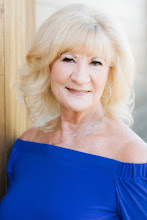
- Kay Farish
- Coldwell Banker Residential Brokerage is the largest international luxury real estate company in the world with over 88,0000 real estate professionals located in over 3000 offices in 49 countries. We do $129.6 million dollars in sales per day with an average sales price for each home reaching $1,000,000 or more. I am privileged to be a part of this global luxury brokerage, and I offer concierge service to my amazing clients all over Orange County, California, and beyond. I am a member of the Institute of Luxury Home Marketing and am equipped to either manage the sale of your current property or assist you in procuring your next investment. My website is KayFarish.com and I can be reached at kayfarish@gmail.com. Please enjoy the blog. It is meant to both inform and entertain as you take a look behind the scenes of the real estate world. It is my hope that with the Bottom Line at the end of each blog, my readers will gain just a bit more understanding of the sales and purchasing processes in the world of real estate! There is a comment section, too, and I'd love to hear from you!


No comments:
Post a Comment